Category Archives: Uncategorized

Review of the Budwig Diet as an Anticancer Therapy in Light of Modern Advances in Science

Revisiting the Budwig Diet Protocol with Recent Research Findings Authenticate it as an Effective Evidence Based Anticancer Therapy

By Paulraj S and Ramalingan K from Journal of Cancer Research and Reports. Published  October 2025

This article reviews the Budwig Diet in the light of improved modern  understanding of the science that Dr Johanna Budwig proposed.

Revisiting the Budwig Diet Protocol with Recent Research Findings Authenticate it as an Effective Anticancer Therapy. pdf 

Précís

This research article revisits the Budwig Diet protocol in light of modern scientific literature to assess whether contemporary evidence supports its role as an anticancer therapy. Continue reading Review of the Budwig Diet as an Anticancer Therapy in Light of Modern Advances in Science

Drugs, Surgery or Alternatives?

In the UK and the USA, and increasingly across the world, public messaging and legislation encourage unquestioning trust in conventional medicine while discouraging consideration of traditional approaches and those labelled as “alternative”.

Whilst some legislation has been essential to protect people from ignorance and exploitation, in the modern era we need to be broader-minded  about diet and lifestyle treatments that are considered alternatives.  Over the years I have seen many people turn around incapacitating and life-limiting conditions just by using alternatives and no meds or surgery.

In some areas, modern medicine is amazing.  It has saved us from terrible diseases such as polio and smallpox,  made childbirt safe and in the treatment of emergencies is almost miraculous. However, many medical treatments can have poor outcomes, especially in treatment of chronic conditions Continue reading Drugs, Surgery or Alternatives?

Vitamin E in Flax Compared to Tree Nuts and Peanuts

Another notes in progress page: This is pure ChatGPT in response to: convert this a bad copy of info from Google Ai , into succint notes for a post for the flaxlady site: interesting that the type of vitamin E in flax actually works differently and sort of compensate for flax having less even though flax’s antioxidant protection is also supported by lignans:

What it yet again shows is don’t get fooled by some high numbers for nutrient levels; different versions of antioxidant nutrients seldom have the same level of power and whole foods that are apparently lower in a nutrient than another food often are more than supported by other anitoxidants and generally these work synergistically – the whole of the antioxidants together working far more effectively than the sum of the different antioxidants. The big message is we need a good varied diet, with lots of whole foods, complete with their various anioxidants and the body will take advantage of them and use what it needs for health.


🌼 Vitamin E in Flax – Why It’s Special

Flax contains a unique balance of vitamin E compounds (tocopherols) that behave differently in the body.

Continue reading Vitamin E in Flax Compared to Tree Nuts and Peanuts

Flaxseed vs Peanuts

N.B this  is notes for a page  still in the process of being written

Nutrients in some foods are More equal than others

Two foods that appear on the nutrition labels to be similar but when investigated, provide our bodies with a very different balance of nutrients

Two foods with similar label calories can behave very differently physiologically and supply the bodies effectively different calorie load, which meanss despite having similar calories, some foods (including flax) can be far less “fattening” than you’d expect just for reading the calories on the label.

Continue reading Flaxseed vs Peanuts

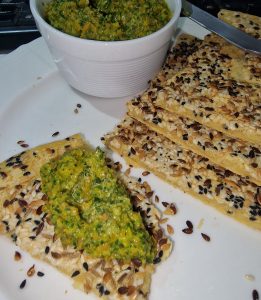
Recipe for Brian; Spiced Green Coriander & Carrot Dip

Tasty Healthy Dip

This dip is absolutely brimming with flavour and packed with health-boosting ingredients and nutrients many of us don’t get enough of. It contains only good fats.  Flaxseed oil, Nature’s richest source of omega-3, is one of the most beneficial fats you can include in an anti-inflammatory way of eating. It is completely free from the questionable ingredients often found in supermarket dips.

healthy saturated fat, salt-free, dairy-free dip Continue reading Recipe for Brian; Spiced Green Coriander & Carrot Dip

Flaxseed for Hypertension

Flaxseed can be an effective part of a natural approach to controlling blood pressure.  Flax may help lower blood pressure for people with hypertension and can support broader improvements in metabolic and cardiovascular health that indirectly benefit long-term BP regulation. Here’s what the human clinical research says about (1) ground/milled flaxseed and (2) flaxseed oil for lowering blood pressure Continue reading Flaxseed for Hypertension

Mechanisms of Plant-based Omega-3 in Multiple Sclerosis

Mechanisms of Alpha-Linolenic Acid (ALA) in Multiple Sclerosis (MS)

Alpha-linolenic acid (ALA) is an essential plant-derived omega-3 polyunsaturated fatty acid (PUFA), abundant in sources like flaxseed oil. Observational studies, including large cohorts like the Nurses’ Health Studies and HOLISM, have linked higher dietary intake or serum levels of ALA to reduced MS risk, lower relapse rates, fewer new lesions, slower disability progression, and better quality of life. Continue reading Mechanisms of Plant-based Omega-3 in Multiple Sclerosis

Overcoming MS: Plant Based Omega-3 (ALA) vs. Fish Oil

Overview of Flaxseed Oil (ALA) vs. Fish Oil (EPA/DHA) Omega-3 in Multiple Sclerosis Management

The Overcoming MS Program favours flaxseed oil omega-3 (ALA) over fish oil omega-3 (EPA, DHA) for MS protection and management of symptoms.  Multiple sclerosis (MS) is a chronic autoimmune condition affecting the central nervous system, where inflammation and demyelination lead to symptoms like fatigue, disability progression, and relapses. Omega-3 fatty acids, including alpha-linolenic acid (ALA) from plant sources like flaxseed oil and eicosapentaenoic acid (EPA)/docosahexaenoic acid (DHA) from fish oil, have been studied for their potential anti-inflammatory and neuroprotective effects in MS. While both types show some associations with improved outcomes, evidence from large observational studies suggests plant-based ALA  in flaxseed oil may offer stronger benefits in reducing relapse rates, improving quality of life (QoL), and lowering MS risk or progression compared to Continue reading Overcoming MS: Plant Based Omega-3 (ALA) vs. Fish Oil