

The Flower Fairy & the Magic of Flax
Flower Fairies were wonderfully whimsical creations, tiny beings imbued with the spirit and symbolism of flowers. Their popularity blossomed in the Victorian era, when they appeared in beautifully illustrated books and prints that blended nature, folklore, and imagination.
Flax (Linum usitatissimum) now tends to be better known for its practical health benefits.
Yet in many ways, modern scientific research has only confirmed what earlier generations seemed to sense intuitively: flax really is rather magical.
Twentieth-century studies into flaxseed, flaxseed oil, and its omega-3 fat, ALA (alpha-linolenic acid) revealed benefits for heart health, inflammation, and immune support. Some of the findings felt almost fairy-tale-like, which is why we’ve also introduced a modern Flax Health Fairy to head up this post as a gentle bridge between old wisdom and modern science.
The birds in the image are Common Linnets, so named because they were birds associated with linseed (the old-fashioned name for flax). Natural foods and remedies are kind to wildlife.
Lin – The Flax Fairy
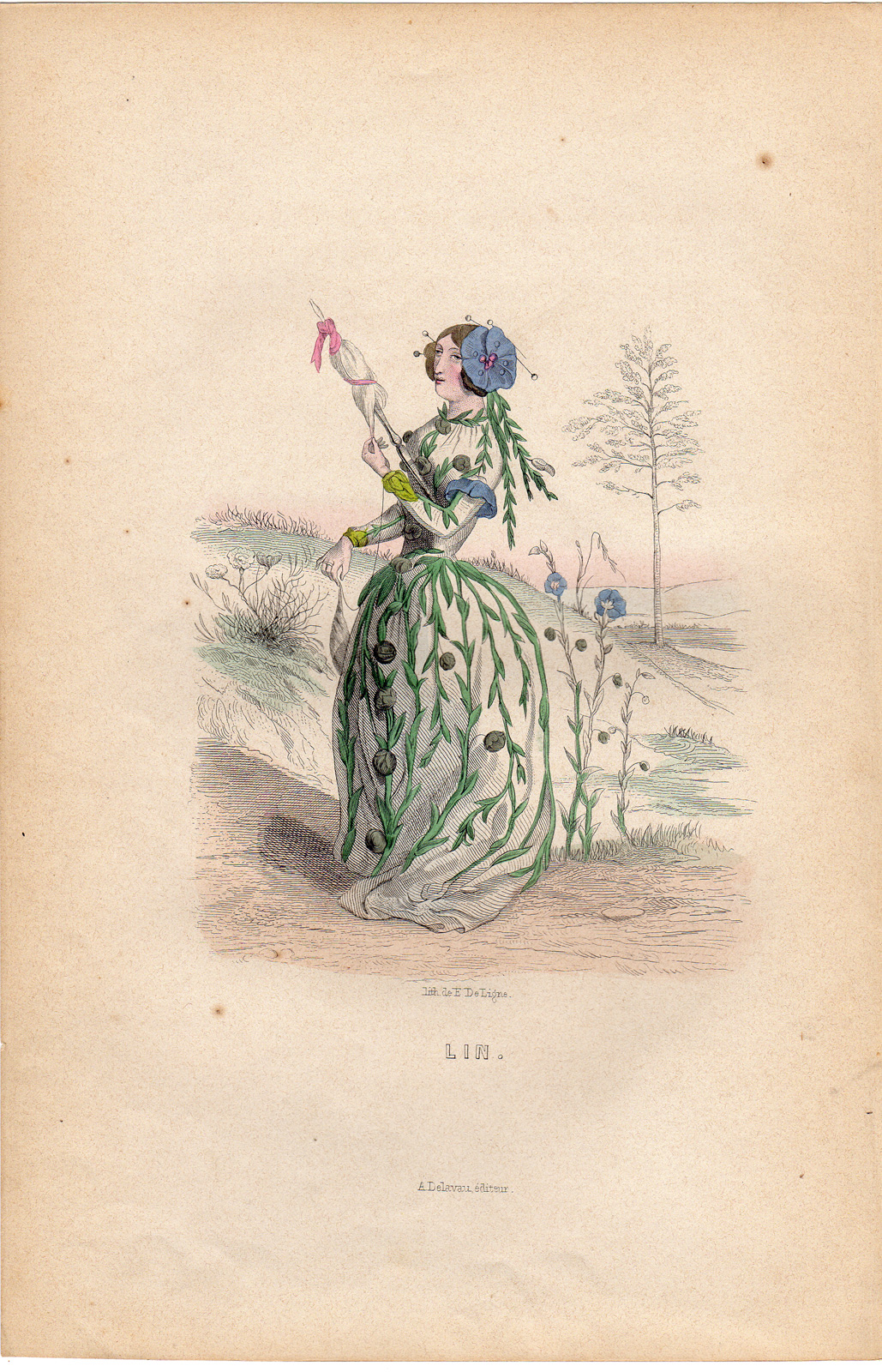
Lin is the French name for linseed and flax.
The antique, hand-coloured steel engraving “Lin” (Flax) comes from the mid-19th-century series Les Fleurs animées (The Animated Flowers), published between 1847 and 1852. The illustrations were created by Jean Ignace Isidore Grandville and engraved by Charles Geoffroy.
In this image, the flax fairy holds a distaff and spindle, linking her directly to the flax flower (Linum usitatissimum) and to the age-old craft of spinning linen thread. Flax processing and spinning were traditionally essential skills for women’s. The practical implications of the distaff reflects the importance of the flax and has given us the term “distaff” and its meaning “of women”.
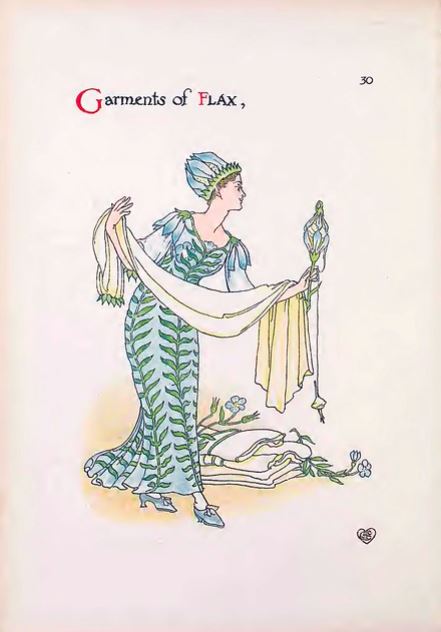
This flax fairy wears a soft blue dress—the true colour of flax flowers—and carries a spindle and bolts of linen fabric. She also holds a distaff, from which prepared flax fibres are fed into the spinning wheel to make thread, later woven into linen. The image beautifully connects flax as a living plant with flax as a fabric that was used in many aspects of everyday life.

How to Use Flax for Heart Health
Flaxseed oil is the most well-known form of flax for heart support. It is rich in omega-3 ALA, which helps balance omega-6 fats in the diet. This balance matters because it can:
- Help lower LDL (“bad”) cholesterol
- Support healthy HDL (“good”) cholesterol
- Improve the overall HDL : LDL ratio
- Help regularise the heart rhythm
- Calm stress which supports cardiovascular resilience
Ground flaxseed is rich in fibre and also provides omega-3. It supports digestion, reduces inflammation, improves nutrient absorption, and helps you feel fuller for longer which is useful for weight control as well as overall health.
m of flax for heart, inflammation and immune system support. The Flaxseed omega-3, ALA, balances omega-6 fats that we get too much of in all the other fats in the modern diet. Improving the ratio of omega-3 to omega-6 gives better balance which helps reduce inflammation, lowers LDL and raises HDL ratio, it can help regularise arrhythmias and calm stress – which is all good for heart health.
Easy ways to add flax to the diet:
Adding flaxseed oil instead of other unhealthy, inflammatory fats rich in omega-6 or saturated fat helps you cut down on the bad and replace it with the healthy omega-3, which is a real health-boosting tactic.
- Use cold-pressed flaxseed oil instead of saturated fats like butter or cream in savoury and sweet dishes
- Swap omega-6 vegetable oils for flaxseed oil in homemade hummus, dips, and salad dressings
- Drizzle flaxseed oil over vegetables, swirl into soup, or add to mashed or baked potatoes
- Add ground flaxseed to meals, especially meals with carbs, cereals, sugars or fruit. Aim for around 25–45 g per day, ideally divided across two or three meals.